
FMD foot-and-mouth disease
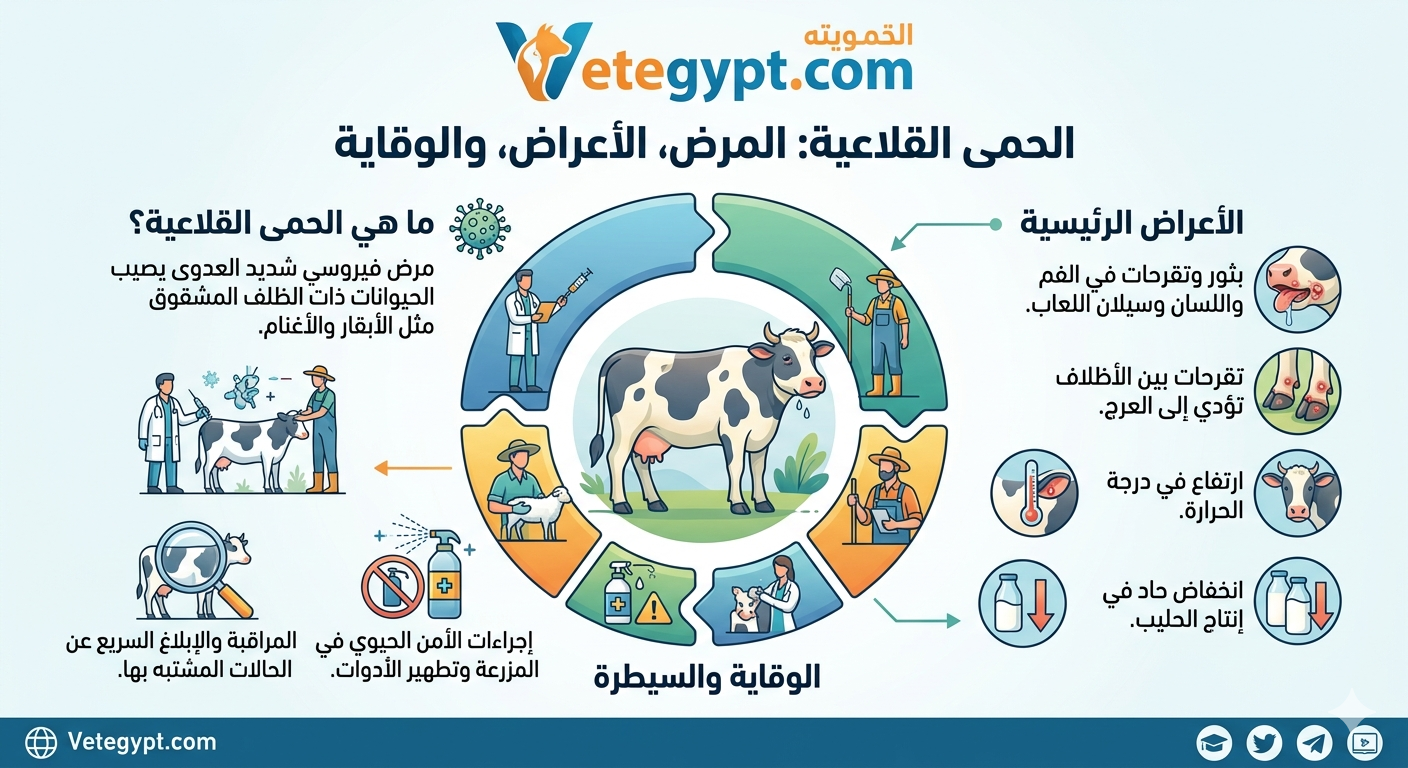
Here is a detailed article that reviews aspects of this disease
What is foot-and-mouth disease?
It is a highly contagious viral disease caused by a virus from the Avtovirus group
. The disease is characterized by the appearance of ulcers and blisters in the mouth, on the tongue, in the area between the hooves, and on the breast.
Symptoms of infection
The severity of symptoms varies depending on the type of animal and its immunity, but common signs include:
A sudden rise in temperature: the animal's temperature may reach 40-41 degrees Celsius.
Lethargy and loss of appetite: The animal stops eating due to mouth pain.
Heavy drooling: Saliva appears in the form of long threads extending from the mouth (trill).
Lameness: the result of inflammation and ulcers in the hoof area.
Decreased milk production: Cow and buffalo breeders notice a sharp and sudden decline in milk quantities.
Methods of transmission
The virus is transmitted in multiple ways that make controlling it a major challenge:
Direct contact: between infected and healthy animals.
Air: Wind can transport the virus over long distances in certain weather conditions.
Contaminated items: clothing, shoes, car tires, and feeding tools that have come into contact with an infected animal.
Animal products: such as contaminated milk or meat (especially if not thermally treated).
Methods of prevention and control
Since the disease is viral, there is no specific treatment that eliminates the virus directly inside the body, and control depends on:
Periodic immunization: following national vaccination schedules using effective vaccines that cover the strains present in the area.
Biosecurity: Tightening control over the entry and exit of animals from farms, and constantly disinfecting vehicles and tools.
Immediate isolation: When any suspected case arises, the animal must be completely isolated and the competent veterinary authorities must be informed.
Economic importance and public health
Although foot-and-mouth disease is rarely transmitted to humans and does not pose a direct health risk to them, its danger lies in:
Huge losses in meat and dairy production.
Stop trade and export of live animals between countries.
The high costs of immunization programs and compensation.
Animal health is closely linked to the safety of the food that reaches the consumer
Products you may need
Browse all products of the All Products section
Related articles
- How do you choose the right cat dry food? Ingredients and Requirements Guide
- Wet or dry cat food: which is better?
- Early signs of cat illness: 10 signs you should not ignore
This article is for general guidance and does not replace consulting a specialist veterinarian.