
Tuberculosis
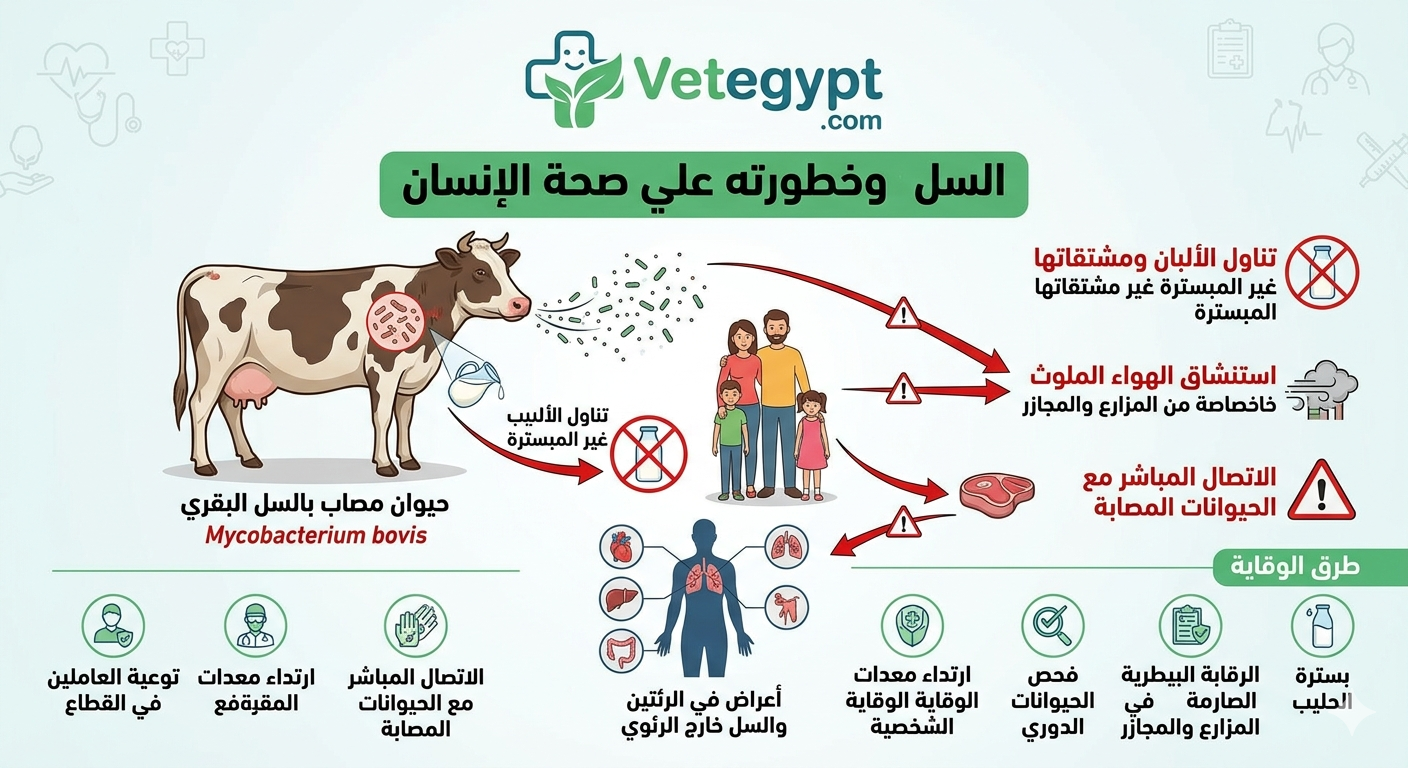
Animal tuberculosis, especially bovine tuberculosis, which is caused by the bacterium Mycobacterium bovis, is considered one of the most prominent common diseases transmitted from animals to humans. This disease represents a major challenge to the One Health system, as human health is closely linked to the safety of animals and the surrounding environment.
Below is a detailed article that discusses the nature of this disease, its seriousness, and how to prevent it:
What is animal tuberculosis?
Animal tuberculosis is a chronic bacterial disease that affects a wide range of mammals, including cows, buffalo, goats, and even some wild animals. These bacteria are characterized by their high ability to survive in the surrounding environment for long periods, especially in cold, dark, and humid conditions.
How is it transmitted from animals to humans?
The disease is transmitted to humans through several main routes:
Consumption of contaminated products: This is the most common method, and is done by eating unpasteurized milk or its derivatives (cheese and cream) resulting from infected animals.
Inhalation: Through droplets from the breathing or coughing of infected animals, which is a danger facing workers in farms, slaughterhouses, and veterinarians.
Direct contact: through contact with open wounds of infected tissue during slaughter operations or handling raw meat.
The danger of animal tuberculosis to human health
The danger of infection with M. bovis is that it causes disease in humans that is clinically indistinguishable from usual human tuberculosis, but with some additional challenges:
1. Extrapulmonary tuberculosis
While human TB mostly affects the lungs, animal TB (foodborne) tends to affect other organs, such as:
Lymph nodes in the neck.
Digestive system and intestines.
Bones and joints.
The urinary and reproductive system.
2. Resistance to natural antibiotics
Bovine TB bacteria are naturally resistant to pyrazinamide, one of the four main drugs used in the standard human TB treatment protocol. This makes treatment more complicated and requires precise medical intervention to adjust the doses and type of medications.
The role of veterinary control and food safety
Strict oversight in the animal production sector is the first line of defense for consumer protection:
Periodic examination: Conducting a “tuberculin” test for animals on farms and excluding infected ones.
Milk pasteurization: Pasteurization (heating milk to a specific temperature for a specific period) is completely sufficient to eliminate tuberculosis bacteria and ensure the safety of the final product.
General prevention recommendations
To protect society from the risks of common tuberculosis, the following procedures must be followed:
Avoid raw milk: Completely abstain from consuming unboiled or unpasteurized milk.
Professional awareness: Raising the awareness of workers in the animal production sector about the necessity of wearing protective clothing and masks when dealing with suspected infected animals.
Supporting “One Health”: continuous coordination between medical and veterinary authorities to monitor and control epidemic hotspots before they are transmitted to humans.
Ensuring the safety of the meat and dairy we eat is not just a routine procedure, but rather a health commitment that starts from the farm and ends at the dining table to ensure a society free of epidemic diseases.
Products you may need
Browse all products of the All Products section
Related articles
- The best types of cat litter: How do you choose the appropriate litter for your cat?
- How do you choose the appropriate cat dry food? Ingredients and Requirements Guide
- Wet or dry cat food: which is better?
This article is for general guidance and does not replace consulting a specialist veterinarian.