
Risks of mice and rodents
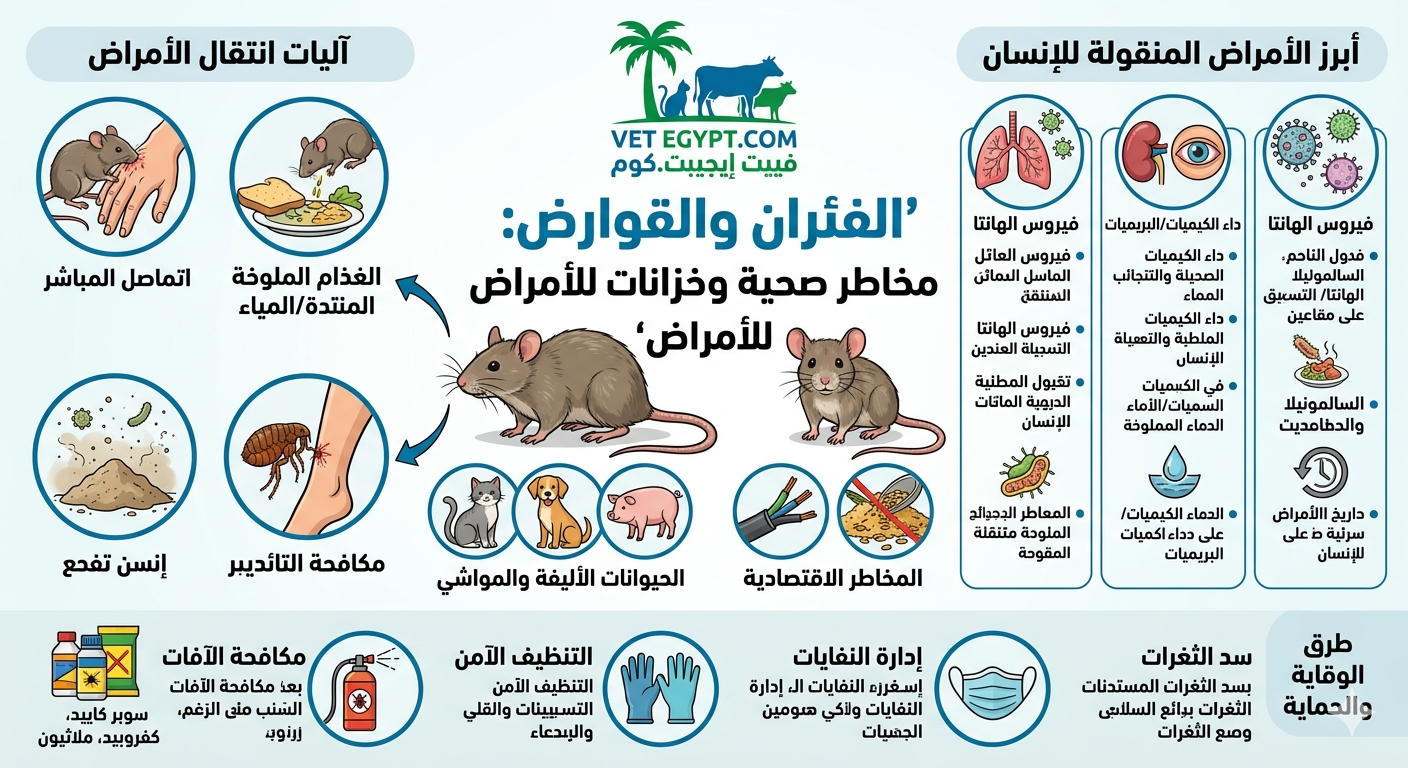
Rats and rodents are among the creatures most associated with epidemics and health disasters throughout history. They are not just a source of household nuisance or property damage, but are “walking reservoirs” of diseases that can be transmitted to humans, pets, and livestock in a variety of ways.
Here is a detailed article about the health risks posed by rats and the mechanisms of transmission from them.
1. Mechanisms of disease transmission from mice
It is not necessary to be exposed to a direct bite from a mouse to contract the disease, but there are many ways in which these rodents transmit toxins:
Direct contact: through biting or scratching.
Contaminants: through contact with urine, feces, or saliva of mice (either by touch or through contaminated food and water).
Inhalation: Inhaling dust contaminated with dried rat droppings.
External parasites: Mice transmit fleas, ticks, and lice, which in turn bite humans and transmit serious diseases such as the plague.
2. The most prominent diseases transmitted by mice to humans
Diseases caused by mice vary between bacterial, viral, and parasitic:
A. Hantavirus
A serious respiratory disease transmitted by inhaling air contaminated with rat droppings. It may develop into “Hantavirus pulmonary syndrome,” which causes severe shortness of breath and lung failure.
B. Leptospirosis
A bacterial disease that is often transmitted through water contaminated with rat urine. It enters the body through skin wounds or mucous membranes (eyes, nose). It may lead to kidney damage, meningitis, and liver failure if left untreated.
C. Plague
Although it is rare today, it still exists. It is transmitted by rat fleas infected with the bacteria Yersinia pestis. Historically known as the “Black Death” for its lethal ability to claim lives.
D. Salmonella (Salmonellosis)
3. The dangers of mice to animals (pets and livestock)
The danger is not limited to humans; Animals that live with us or on farms are also susceptible to infection:
Pseudorabies: It affects pigs, dogs, and cats, and is often fatal to pets. Mice are the main carrier of it.
Toxoplasmosis: Mice play a role in the life cycle of this parasite that is transmitted to cats, and from there to humans (especially pregnant women).
Tapeworms and parasites: Mice transmit worm eggs that pets may ingest while hunting or playing.
4. Economic and environmental risks
Apart from diseases, rats cause structural damage that indirectly increases health risks:
Fires: damage to electrical wires leads to short circuits and home fires.
Contamination of grain stores: Rats do not eat large quantities, but they contaminate many times what they eat with their droppings, making crops unfit for human consumption.
5. Methods of prevention and protection
To reduce these risks, a strict preventive strategy must be followed:
Sealing gaps: Sealing any holes in the walls larger than 6 mm (the size of a pencil).
Waste management: Keep garbage in tightly sealed containers and do not leave pet food leftovers exposed.
Safe cleaning: When cleaning rat droppings, you must wear masks and gloves and spray the area with disinfectants before sweeping to avoid the spread of contaminated dust.
Pest control: seek the help of specialists in the event of a large infestation to ensure its elimination in a healthy manner.
Use rat control products available on Vetegypt.com
The bottom line: Rats are not just “disgusting” creatures, but rather a real health threat that requires dealing with them seriously and with caution. Constant prevention and hygiene are the first line of defense against epidemics that these small rodents may carry.
Products you may need
Browse all products of the All Products section
Related articles
Cat IllnessThis article is for general guidance and does not replace consulting a specialist veterinarian.