
Leptospirosis
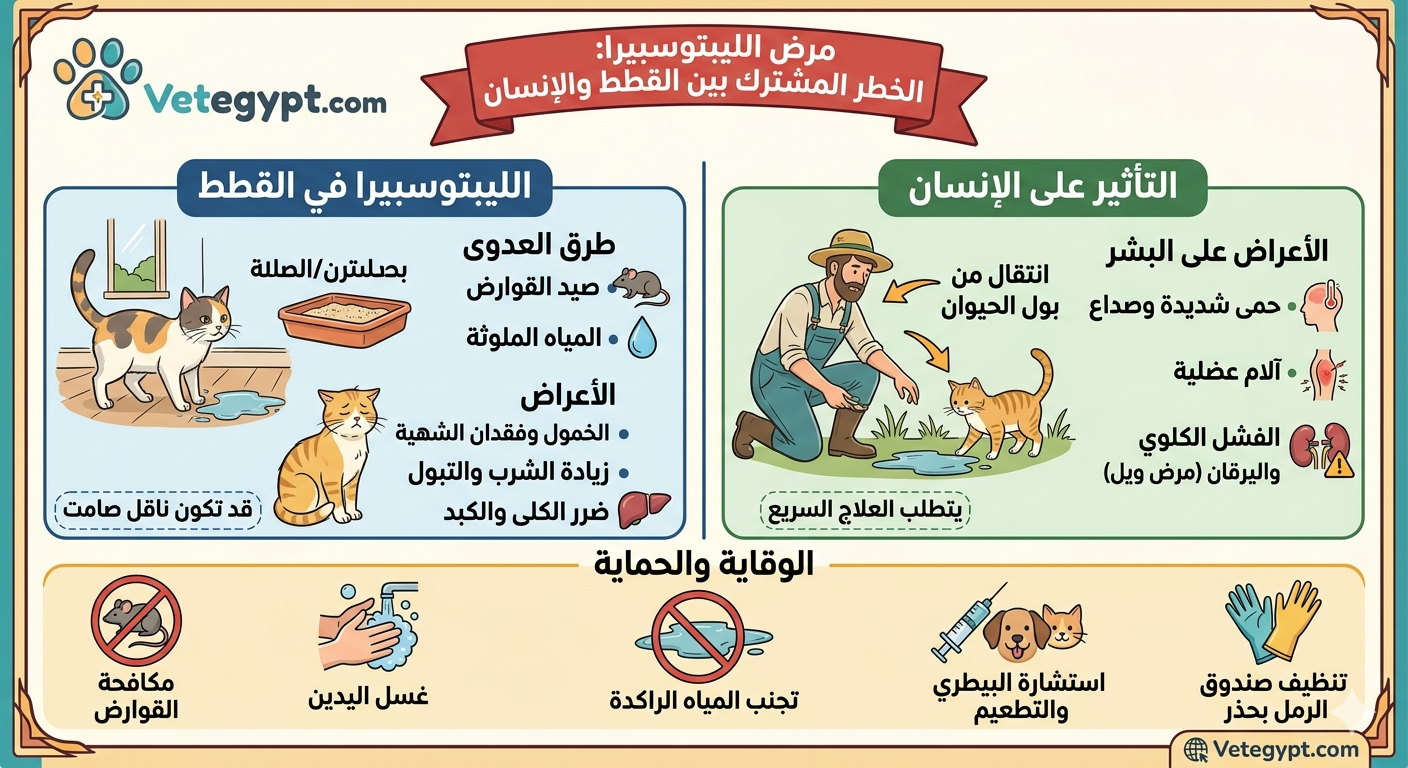
Public health is a common issue between humans and pets, and one of the most prominent diseases that embody this interconnectedness is Leptospirosis. Although it is more common in dogs, recent studies have proven that cats are not immune to it, and may even play a hidden role in transmitting it to humans.
Here is a detailed article about this disease, its symptoms, and how to protect yourself and your pets from it.
What is Leptospira disease?
Leptospira disease is a bacterial infection caused by a spiral bacterium called Leptospira interrogans. This spread
Bacteria are worldwide, and particularly thrive in areas with warm, humid climates and stagnant water.
The infection is transmitted primarily through the urine of infected animals (such as rodents, livestock, or dogs) that contaminate soil or water.
Leptospira in cats: “the hidden enemy”
For a long time, it was thought that cats had a natural immunity to this disease, but the reality is that cats may become infected without showing severe symptoms like dogs, making them a silent vector.
How are cats infected?
Hunting: Cats that go out hunting and eat rodents (mice and rats) are most at risk.
Contaminated environment: walking in or drinking water contaminated by the urine of an infected animal.
Symptoms in cats
Symptoms are often mild or non-specific, and include:
Anorexia and lethargy.
Increased drinking of water and urination (an indicator that the kidneys are affected).
Sudden fever.
In advanced cases: yellowing of the skin and eyes (jaundice) as a result of liver failure.
Effect of Leptospira on humans (disease transmission)
Leptospira is classified as a zoonotic disease, which means it is transmitted from animals to humans.
How is it transmitted from the cat to you?
The disease is transmitted through direct contact with the urine of an infected cat or surfaces contaminated with it, as the bacteria penetrate the human body via:
Wounds and scratches in the skin.
Mucous membranes (eyes, nose, or mouth).
Symptoms in humans
Symptoms range from “flu-like” to life-threatening conditions:
The first stage: high fever, headache, muscle pain (especially in the legs), and vomiting.
Stage II (Weill's disease): If untreated, it may progress to kidney failure, liver damage, meningitis, or acute respiratory distress.
Diagnosis and treatment
In cats:
The veterinarian relies on blood tests (PCR) and antibody tests (MAT). Treatment consists of strong antibiotics (such as doxycycline) for a long period to ensure the elimination of bacteria in the kidneys and prevent the cat from excreting them in the urine.
In humans:
Treatment is with antibiotics (penicillin or doxycycline). Success depends on early diagnosis before vital organs are damaged.
Prevention methods: How do you protect your family?
Rodent control: Preventing rodents from entering the home is the first step, as they are the main source of bacteria.
Personal hygiene: Wash your hands well after cleaning the cat's litter box.
Handle with caution: If your cat is sick with urinary symptoms, wear gloves when cleaning its area and use disinfectants that contain chlorine.
Vaccination: Although Leptospira vaccination is common for dogs, consult your veterinarian about whether you need to vaccinate your cat if he goes out hunting a lot.
Avoid stagnant water: Do not allow your pets to drink from puddles or street water.
Important note: If you own a cat that goes out hunting regularly and has persistent flu-like symptoms, tell your human doctor that you have a pet in your home to ensure the correct tests are done.
Products you may need
Browse all products of the All Products section
Related articles
- Cat hair loss and fur care: practical solutions
- Why does your cat refuse the litter box? 7 reasons and solutions
- Cat neutering: benefits, appropriate time, and after the procedure
This article is for general guidance and does not replace consulting a specialist veterinarian.