
A guide to distinguishing between fresh poultry and dead poultry - dead before slaughter
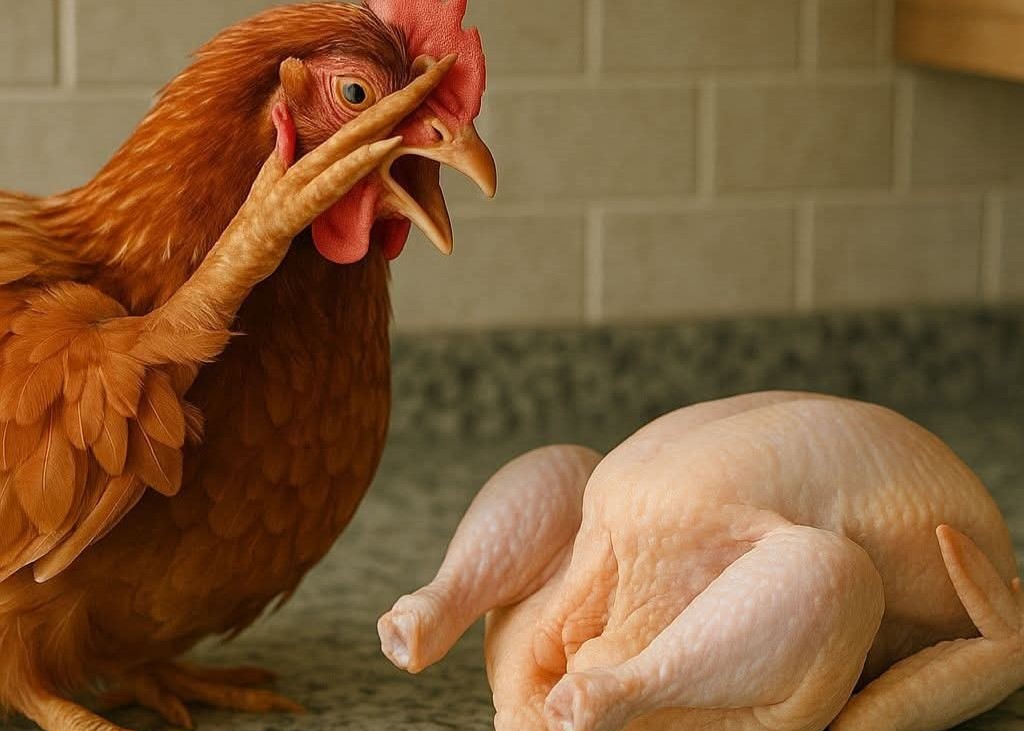
Guide to distinguish between fresh poultry and dead poultry (dead before slaughter)
In light of heat waves, some weak souls may resort to marketing poultry that died as a result of the heat. Here are the most important scientific and practical signs for detecting spoiled poultry or slaughtering them after they die (what is known as non-vital slaughter):
First: Virtual and physical signs
Discoloration and cyanosis (blood accumulation):
If several hours have passed since the chicken died before it was cleaned, you will notice blood collecting on one side of the body (chest, back, or one side) due to gravity, which appears in the form of clear “blueness” and extensive bruising.
Meat congestion:
Meat that tends to be very dark red or brown indicates that the chicken was slaughtered while it was dying, or that it was afflicted with a fever-causing disease that led to blood congestion in the muscles. In either case, it is not fit for consumption.
Tissue texture:
Spoiled poultry is characterized by a “sticky” (snotty) texture and frayed tissue. You can test this with finger pressure; If the pressure leaves a deep, sunken mark that does not recede quickly, this is evidence that the chicken is not fresh, or has been subjected to repeated freezing and defrosting, or was slaughtered after death.
Smell:
Second: The difference between natural congestion and corruption
Sometimes the color of the “hips” tends to be dark without any smell; To ensure its safety:
Tip: Place the pieces in ice water or in the freezer for 30 minutes. If the color improves and approaches normal, this means that the darkening was due to the bird’s body temperature before cooling. If the color remains dark, it must be disposed of immediately.
Third: Signs of non-vital slaughter (after death)
When slaughter is done after death, specific anatomical signs appear:
Internal viscera:
The liver and viscera are very congested with dark blood, and when pressed, clotted blood comes out of them.
Slaughter wound:
If the neck is present, you will find that the edges of the slaughter wound are irregular and do not show signs of shrinkage, because the tissues did not produce a vital reaction because there was no pulse or blood flow at the moment of slaughter.
Fourth: Important preventive tips
Avoid anonymous offers:
Approved source:
Make sure to buy chilled poultry from certified slaughterhouses bearing a “barcode” and registered with the General Authority for Veterinary Services.
Direct slaughter:
When purchasing from poultry stores, be sure to inspect the chicken alive, slaughter it, and prepare it in front of your eyes.
Comprehensive examination:
Don't forget to check the color, texture, and scent before completing your purchase.
The correct guide to storing poultry (refrigeration and freezing)
Poultry is considered one of the fastest food items to spoil, so it must be handled carefully from the moment of slaughter until cooking.
1. Preparation before storage
Good cleaning:
Poultry should be washed well with cold water, salt and lemon (and flour to remove odors), taking care to remove any remnants of the internal organs because they are the fastest parts to rot.
Complete drying:
This step is the most important; Use paper towels to completely dry the chicken from the water before wrapping, because moisture is the ideal environment for bacteria to grow.
Partition:
Divide the poultry into quantities suitable for one meal only, to avoid the “defrosting and refreezing” process, which destroys the meat tissue and causes spoilage.
2. Storage in the refrigerator (short-term refrigeration)
Duration:
The period of keeping fresh poultry in the refrigerator should not exceed a maximum of two days (48 hours).
Location:
Place in the coldest part of the refrigerator (usually the bottom shelf).
Precaution:
It should be placed in an airtight container to prevent its liquids from leaking into other foods (to avoid cross-contamination).
3. Freezer storage (long-term freezing)
Packaging method:
Use vacuum freezer bags as much as possible, or wrap the chicken in plastic wrap and then a layer of foil to protect it from “freezer burn,” which makes the meat tough and dry.
Duration:
* Whole chicken:
* It can remain valid for up to 12 months.
Pieces (breasts, hips):
It is valid for 6 to 9 months.
Cooked poultry:
Valid for up to 4 months.
4. Golden rules of poultry safety
The “what goes out does not come back” rule: Once the poultry is taken out of the freezer and defrosted, it is strictly forbidden to re-freeze it while it is raw; Because this increases the percentage of bacteria dramatically.
The correct jaw method:
The best and safest way to defrost is to move the poultry from the freezer to the bottom shelf in the refrigerator the night before cooking (24 hours).
Beware:
Soaking poultry in warm water or leaving it in the heat of the kitchen exposes it to very rapid bacterial growth.
Storage date:
It is always recommended to write the storage date on the outside of the bag to ensure that the oldest is consumed first.
Prolonged power outages pose a challenge to food safety, especially poultry. Here are the scientific rules for how to act to ensure the safety of your family:
Guide for dealing with poultry during a power outage
1. The golden rule: “Don't open the door.”
Freezer:
A completely closed freezer maintains its temperature for 48 hours if it is full, and for 24 hours if it is half full.
Refrigerator:
It keeps cold for only 4 hours.
Tip: Whenever you open the door, cold air will escape and the meat will spoil faster.
2. How do you decide: Is poultry safe or should it be thrown away?
Once power is restored, check poultry based on the following conditions:
First case (safe):
If the poultry still contains ice crystals or its temperature does not exceed 4 degrees Celsius (it feels very cold to the touch as if it was in the refrigerator), you can refreeze or cook it immediately.
The second case (needs caution):
If the ice has completely melted but the poultry is still very cold (below 4°C), it should be cooked immediately and it is not preferable to refreeze it raw.
The third case (danger):
If the snow has melted and the poultry has been at room temperature for more than two hours, it must be disposed of immediately even if it does not exhibit an unpleasant odor. Because bacteria (such as salmonella) multiply very quickly at this temperature.
3. Signs of corruption after the snow melts
Poultry must be disposed of immediately if one of these signs appears after a power outage:
Smell:
Emitting any unusual odor (even if mild).
Texture:
If the skin or meat feels “sticky” or “mucous.”
Color:
The color changes to gray or pale green spots appear.
4. Proactive tips (for the future):
Ice bags:
Always keep frozen water bottles or ice bags in the freezer; It helps keep the cooler longer when the power goes out.
Meat assembly:
When the power goes out, bring the meat and poultry pieces closer together inside the freezer, as the large frozen mass acts as a self-cooling agent for each other.
Products you may need
Browse all products of the All Products section
Related articles
- Cat vaccinations: the complete schedule and their importance
- Cat hair loss and fur care: practical solutions
- Why does your cat refuse the litter box? 7 causes and solutions
This article is for general guidance and does not replace consulting a specialist veterinarian.