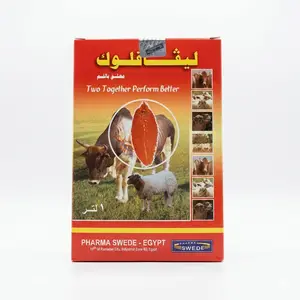
Liver Fluke Fasciola in Cattle and Sheep

Liver fluke is a parasite tied to water, which is why it is common in Delta villages with canals, drains and rice fields. The fluke needs a small water snail to complete its life cycle, then leaves it to attach to berseem and aquatic plants eaten by livestock. In sheep it can cause sudden death; in cattle and buffalo it causes anaemia, swelling under the jaw and a milk drop that no ration explains, while the liver is progressively damaged and becomes unfit for sale.
Life cycle and the role of the snail
The cycle begins with eggs passed in the manure of an infected animal, hatching in water into larvae that swim until they find the intermediate snail, a small species living in shallow water and slow canals. Inside the snail the larvae multiply and emerge as cercariae that swim and become infective cysts attached to berseem and grasses near the water.
Livestock eat the cyst with the feed, it hatches in the gut, and the young fluke migrates through the gut wall to the liver, reaching the bile ducts weeks later. The time from infection to eggs appearing in manure can be three months. That means an animal that looks healthy today may have been infected for months, and treatment at a single point in time cannot break the cycle.
Acute fasciolosis in sheep
In sheep the acute form appears when lambs eat a large number of cysts in a short time, so huge numbers of young flukes migrate through the liver causing bleeding and extensive damage. The result is sudden death or rapid wasting and jaundice, and the animal may die before any eggs appear in the manure, which is why diagnosis cannot rely on faecal testing alone.
At post-mortem the liver is enlarged, friable and dark with bleeding in the tissue. The farmer suspects plant poisoning or viral diarrhoea, while the feeding history points to grazing on wet land or berseem from a field near a canal. These details guide the vet to the correct diagnosis.
Chronic fasciolosis in cattle and buffalo
In cattle and buffalo the disease moves slowly: gradual wasting despite a normal appetite, pale membranes, lower milk and delayed growth and puberty. The distinctive sign is soft swelling under the lower jaw, known as bottle jaw, caused by low blood albumin. Chronic diarrhoea may appear and the abdomen may be slightly distended.
Liver damage is not only functional: the organ is rejected at the abattoir and carcass value falls. An infected animal resists other diseases poorly and needs more feed for no return, so the farmer blames the ration and changes it with no benefit. Here laboratory faecal examination or a blood test is the deciding step.
Treatment, prevention and breaking the cycle
Treatment relies on flukicide drugs given under veterinary supervision; some act only on adult flukes and others also on immature stages, so the choice and timing depend on the age of infection. Milk and meat withdrawal must be respected, and treatment must not be repeated without testing, because overdosing harms the liver.
Prevention starts with the land: fill and drain canals, remove aquatic plants, keep livestock out of wet pastures and never feed berseem or water plants from fields near water. Snail control is done through environmental measures under expert supervision. Use a product such as levafluke within a veterinary programme, support animals with mineral salts from livestock vitamins, and follow livestock and sheep plus pest control.
- Do not graze livestock on wet land or near drains.
- Never feed berseem or water plants from fields touching canals.
- Fill small canals and remove aquatic vegetation.
- Treat within a veterinary programme that respects infection age and withdrawal periods.
- Test manure regularly in herds with a history of fluke.
- Watch for bottle jaw and unexplained milk drops.
Conclusion
Liver fluke is a disease of land and water before it is a disease of animals. Breaking the cycle by avoiding wet grazing, draining canals and controlling snails, with correctly timed veterinary treatment, protects both the liver and the long-term profit of the farm.
This article is general guidance and is not a substitute for examining your animal by a licensed veterinarian. In emergencies, contact your vet immediately.