How to Choose the Best Cat Litter in Egypt

The litter tray is the place that most affects how a home looks and smells, and it is also a mirror of your cat’s health. The wrong litter creates dust around the eyes and airways, tracks across the flat, and can make a cat refuse the tray and urinate elsewhere. The Egyptian market offers local and imported types at very different prices, with clumping bentonite in charcoal or rose scents among the most popular. This guide compares the options and explains a cleaning routine that protects cat and family.
Litter types sold in Egypt
Clumping bentonite is the most used type because it forms solid clumps that are easy to remove and traps odour inside the clump rather than leaving it in the tray. Egyptian local brands have improved in absorbency, but dust quality varies between labels, so try a small bag first. Charcoal or rose scented clumping litter adds odour masking but does not replace daily scooping.
Silica gel absorbs moisture and holds odour longer with less dust, but it costs more and kittens may swallow the beads. Compressed wood pellets are cheap and eco-friendly but do not clump and need more frequent replacement. Tofu litter is plant based, biodegradable and light, while paper litter suits cats recovering from surgery because it does not stick and reduces infection risk.
How to choose the right litter
Start with the cat: asthmatic cats or those that sneeze often need a low-dust litter, and kittens that mouth everything need larger granules that are hard to swallow. If she carries litter between her toes across the flat, a light type makes it worse while heavy bentonite reduces it. Monthly budget matters too, since a cheap litter changed every two days can cost more than a good one lasting a week.
Never buy a large bag of a new brand before a small trial, because some cats reject the scent or texture. Switch types gradually by mixing old and new over a week. A very strong fragrance can bother a cat’s nose more than a human’s, so the rule is nearly unscented litter with cleanliness providing the freshness.
- Low-dust litter for cats that sneeze or have asthma.
- Larger granules for kittens that swallow small objects.
- Heavy bentonite to reduce tracking around the flat.
- Good clumping that lifts urine without breaking apart.
- A faint or unscented product to avoid rejection.
- Bag price divided by how long it actually lasts.
Rules for cleaning the tray
Remove clumps and faeces at least twice a day, and fill the tray five to eight centimetres deep so she can dig without urine sticking to the base. Replace the litter completely each week, wash the tray with warm water and mild soap, and let it dry fully before refilling. Avoid chlorine and ammonia, whose smell resembles urine and can push a cat to toilet outside the box.
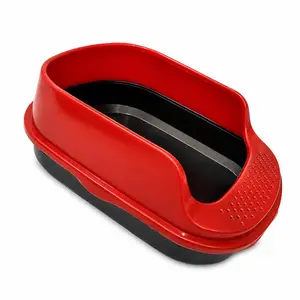
The well-known rule is one tray per cat plus one extra, placed in quiet spots away from food and water. The tray should be about one and a half times the cat’s length, and high sides reduce scattering. Use an easy-to-wash plastic litter box and place a mat underneath to catch granules and protect your floors. All the care tools are available in our pet grooming.
Common mistakes that harm cats
A tightly closed box in an Egyptian summer traps heat and odour and makes the place unbearable, especially in small unventilated bathrooms. Placing the tray next to the food bowl is a common error that reduces use. Never move the tray suddenly either; cats are sensitive to routine and may reject the new spot and urinate on the carpet. For more cat care guides, see our cats and dogs.
Watching the clumps matters for health: a very large or very small urine clump, or a change in frequency, can be the first sign of kidney disease, diabetes or urinary blockage, especially in males. Use a litter that makes clumps clearly visible, such as Rome Cat carbon clumping litter, and never ignore a change in habit. Anything lasting more than two days deserves a vet visit.
Conclusion
The right litter is neither the most expensive nor the cheapest, but the one your cat accepts while reducing dust, tracking and cleaning effort. Scoop twice daily, wash weekly, and watch the clumps because they are an early health indicator. If she refuses the tray or her urination changes, consult a vet before changing litter again.
This article is general guidance and is not a substitute for examining your animal by a licensed veterinarian. In emergencies, contact your vet immediately.