
Results of recent studies on the physiology of the rumen of young calves
A recent study on the physiology of the rumen of calves showed important results that reformulate the traditional nutrition concepts used in the animal production sector, specifically in the lactation and weaning stages.
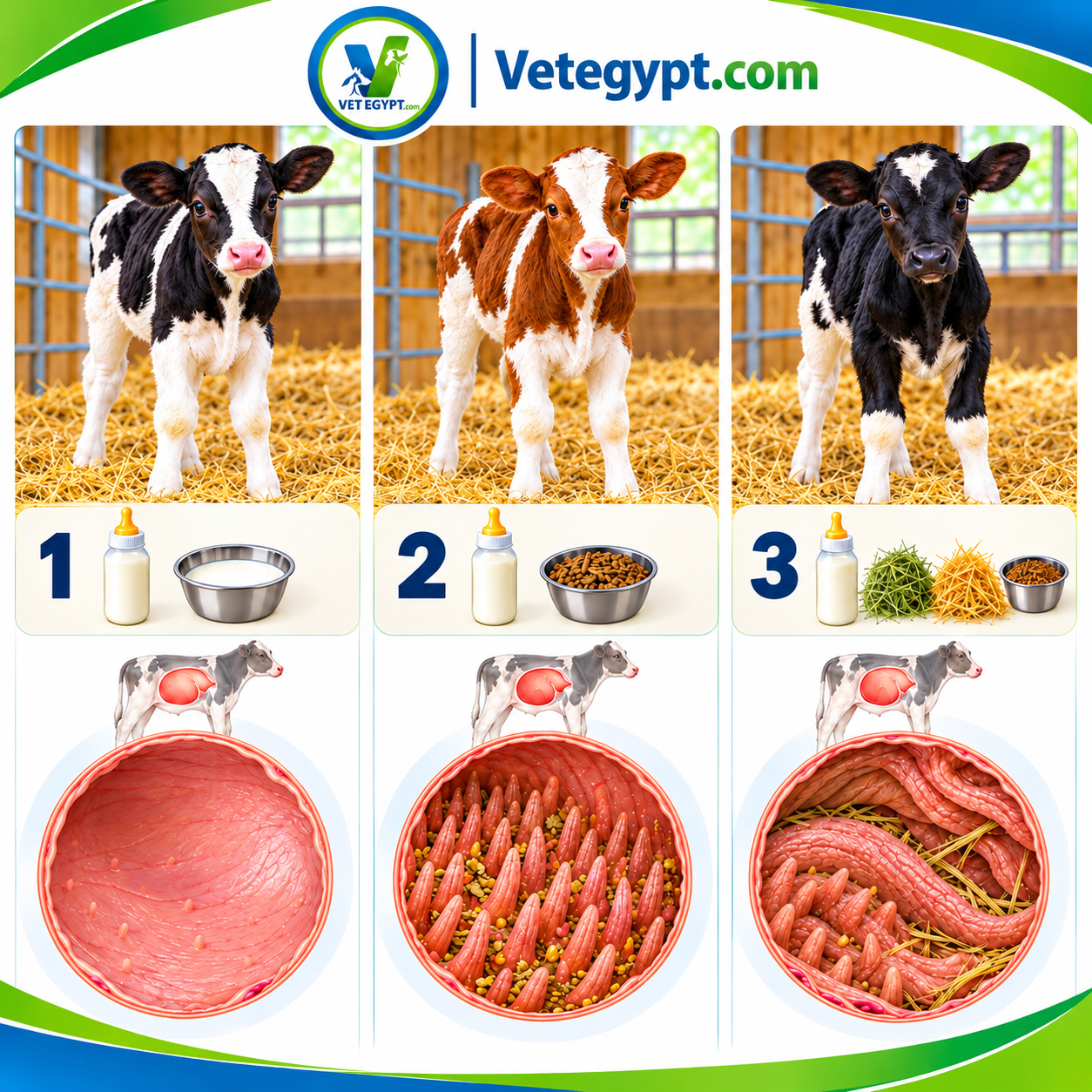
To evaluate these results, a comparative examination was conducted of the rumen of three calves that were followed with different feeding systems:
The first calf: its feed was limited to milk only.
The second calf: fed milk in addition to starter feed.
The third calf: fed on milk and hay.
The role of rumen papillae and the importance of early nutrition
Rumen papillae (which are similar in appearance to carpet pile) are the functional unit responsible for digesting and absorbing nutrients and converting them into energy with high efficiency. In order for these papillae to grow in an ideal and fully functional manner, they mainly need two types of volatile fatty acids: butyric acid and propionic acid, which result exclusively from the process of fermenting the starch present in the starter feed.
The effect of diet on rumen development:
Milk only system (first calf):
This system results in the inner wall of the rumen remaining smooth, smooth and free of active papillae, with the exception of very little growth. As a result, the calf after weaning faces extreme difficulties in digestion, which negatively affects the growth rate and leads to weight loss and frequent diarrhea and intestinal disorders.
Milk and hay system (third calf):
Although high-fiber fermentation (e.g. hay and hay) produces acetic acid which contributes to increased rumen wall durability, it significantly limits the growth and development of papillae, impairing the efficiency of long-term nutritional absorption.
Milk and starter feed system (second calf):
It is the ideal system for rehabilitating the rumen at the appropriate time. Fermentation of the starter stimulates the production of acids responsible for the dense and healthy growth of papillae, which increases absorption efficiency and feed conversion rates compared to calves that relied on coarse fibers early on.
Conclusion:
This scientific approach emphasizes the importance of introducing starter feed at the right time to stimulate early and effective development of the calf's rumen, ensuring the highest feed conversion rates and production efficiency after weaning.